In my last post I discussed a model of responsibility for teaching technology outcomes such as the ISTE NETs or Journey On. Central to this model was that it should be a team approach with all teachers using technology as a tool within their classroom student’s with the help of a technology guide to oversee and monitor the process. While this sounds good in theory, the successful integration of technology requires considerable planning and support.
There are several tools available to help teachers evaluate their use of technology, including the SAMR and TPACK models. However, if a school wants technology to be fully integrated across curricular areas there needs to more support provided than simply handing teachers a sheet and asking them to evaluate themselves and their use of technology in the classroom. There are five things that I see as necessary for successful cross curricular technological integration:

There needs to be someone guiding both teachers and students in their use of technology in the classroom.
Technology Guide
The technology guide or technology facilitator is responsible for the overall integration of technology within the school. They ensure that all technology outcomes are being met and are suitable for the students. The technology guide also provides support and training for teachers and students when needed on topics including how to operate specific programs, assessment, digital citizenship, technology integration, and Internet safety. They should also seek out new technologies and evaluate their usefulness in metting the aims of the school’s technology plan.

Continual training is essential to ensure that skills and knowledge are current.
Training
Teachers need training in integrating technology. This can be done by the technology guide mentor, outside presenters or other teachers. However, topics need to be evaluated to ensure that they meet the aims of the school.

Successful technology integration does not happen overnight. People need time to learn, try new things and plan.
Time
Time needs to be allowed for integration to happen at a pace that does not overwhelm teacher. Time needs to be allowed for integration to happen at a pace that does not overwhelm teachers.Teachers also need time to plan collaboratively with the tech mentor and other teachers to brainstorm ideas and create plans.

There needs to be freedom for teacher when integrating technology. Recognize that there will be both successes and failures. Celebrate and learn from both
Freedom
When integrating technology teachers need to feel that it is okay to make mistakes and learn from them. Teachers will be resistant to try new things when they are in an environment that will punish them for making a mistake.

There needs to be a plan in place otherwise nothing will be accomplished.
Plan
Teachers need a plan. They need to know what the outcomes, who is responsible for which outcome, what the aims are for the school, what they achievement looks like, and what is expected of them. This is probably the most crucial element, as without a clear and concise plan technology integration will fail.
A technology guide, training, time, freedom, and a plan are my five essential elements for successful technology integration into a school’s curriculum. Admittedly it seems easy, however, in order to build a strong program that can continue to evolve there needs to be a lot of work put in. What do you think are essential elements to ensure successful integration of technology in the classroom?
Image Credits
Tour Guide by andyaldridge found on Flickr, Creative Commons Licensed
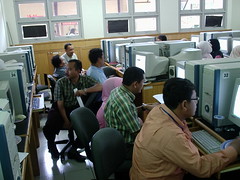
Blogging Course for Teachers by Ikhlasul Amal found on Flickr, Creative Commons Licensed
The Passage of Time by ToniVC found on Flickr, Creative Commons Licensed
Embracing Beauteousness by Martin Gommel found on Flickr Creative Commons Licensed
Swooshable Planning by Bohman found on Flickr, Creative Commons Licensed